Businesses today have more opportunities than ever to connect with customers, clients, employees, and industry professionals. However, gaining attention in a crowded marketplace can be challenging. A well-designed physical environment can help a company communicate its identity, create stronger brand recognition, and give audiences an experience they are more likely to remember.
This is where scenic production plays an important role. Scenic production involves the creative design, fabrication, installation, and coordination of physical environments for commercial events and business spaces. It can transform convention centers, corporate venues, exhibition halls, outdoor event areas, and even parking lots into engaging environments that support specific business goals.
Rather than treating a venue as an empty space, scenic production turns it into an intentional part of the overall audience experience.
What Makes Scenic Production Immersive?
An immersive environment encourages people to feel connected to the space around them. Instead of simply looking at a company logo or promotional banner, visitors experience branding through structures, lighting, graphics, architecture, technology, and carefully planned layouts.
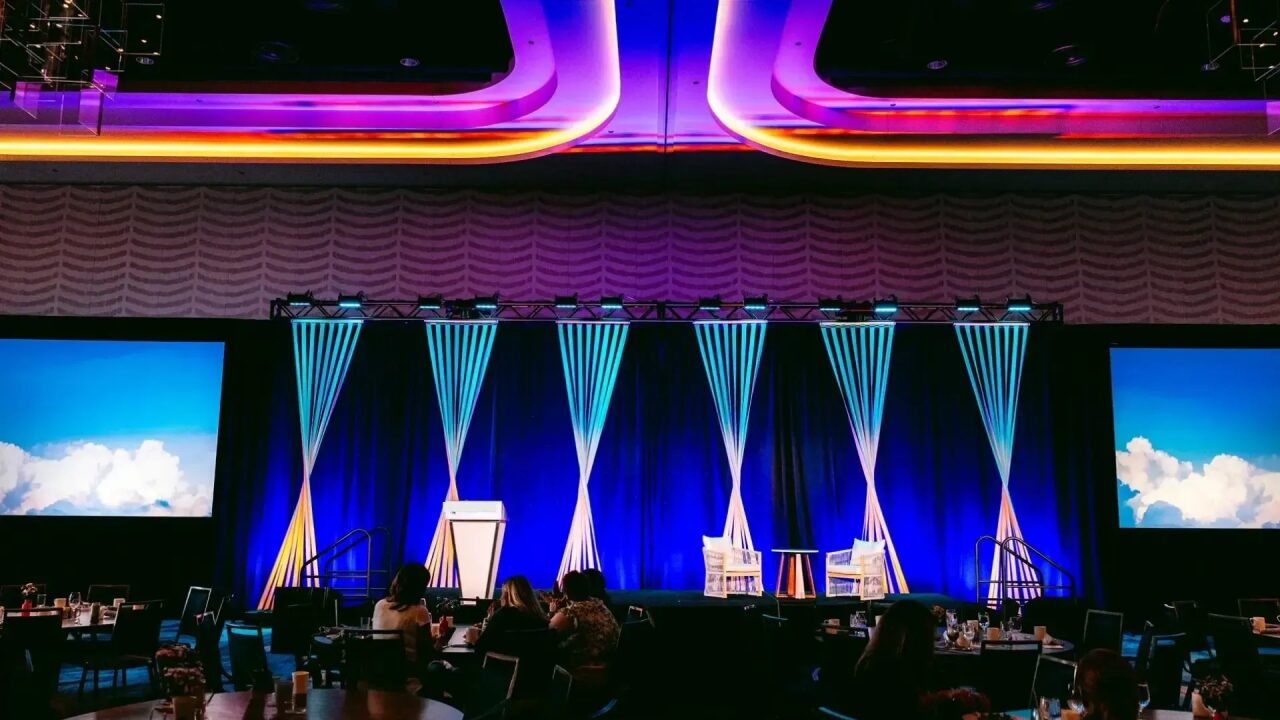
Scenic production can incorporate stages, branded walls, entrance structures, product displays, dimensional lettering, illuminated elements, digital screens, directional signage, and interactive features.
The combination of these elements can establish a visual story. When every component supports the same concept, the environment becomes more cohesive and memorable.
For businesses, the goal is not simply to create something attractive. The environment should help communicate the company’s message and encourage meaningful interactions.
Designing Around Business Objectives
Successful scenic production begins with understanding what a business wants to accomplish.
A company launching a new product may want visitors to focus on product demonstrations. A corporate conference may prioritize presentations and networking. An industry exhibition may focus on generating leads and creating opportunities for sales conversations.
These different objectives require different environments.
Designers can consider visitor behavior, available space, branding requirements, audience demographics, and event schedules when developing a concept. The resulting scenic environment can then be designed around the activities that matter most to the business.
The Role of Custom Fabrication
Custom fabrication is a major part of professional scenic production. Businesses often have unique branding and spatial requirements that cannot be met with standard rental displays.
Custom structures can be designed to fit specific dimensions, incorporate company branding, and provide practical functions.
For exhibition projects, trade show fabrication can be used to create customized booth walls, counters, product displays, meeting areas, overhead structures, and branded architectural features.
The advantage of custom fabrication is control. Businesses can determine the size, shape, materials, finish, graphics, and functionality of the environment instead of adapting their brand to a generic setup.
Creating Strong Visual Brand Recognition
An immersive environment should make the business recognizable without making the space feel like an advertisement covered in logos.
Scenic production provides numerous ways to integrate branding naturally. Company colors can appear throughout the environment, while dimensional logos can become architectural features. Branded graphics can be incorporated into walls, counters, stages, and displays.
Professional trade show fabrication can help businesses create exhibition environments where branding is integrated directly into the physical structure.
This approach can create a stronger sense of identity. Visitors may remember the shape of a structure, the design of an entrance, or the visual atmosphere of an exhibition space long after the event has ended.
Using Lighting to Influence the Environment
Lighting is one of the most powerful tools available in scenic production. It can highlight specific features, create depth, establish atmosphere, and direct visitor attention.
A business might use lighting to emphasize a stage during a presentation, highlight a product display, or draw attention to an entrance structure.
LED lighting can also provide flexibility during an event. Different lighting effects can be used for presentations, product demonstrations, announcements, or special activities.
However, effective lighting requires careful planning. Too much light can reduce visual impact, while poorly positioned fixtures can make important branding difficult to see.
Integrating Digital Technology
Digital technology can make scenic environments more interactive. Large-format screens, projection systems, touch displays, and digital signage can be incorporated into physical structures.
For example, a business might use a large display wall to present product information or showcase company content. An interactive screen could allow visitors to explore services or product specifications.
The key is integration. Digital technology should work with the physical scenic environment rather than appear as an unrelated addition.
When physical structures and digital content are designed together, businesses can create experiences that feel more cohesive and engaging.
Scenic Production for Trade Shows
Trade shows are highly competitive commercial environments. Companies may have only a limited amount of floor space to communicate their value to potential customers.
This makes effective scenic production particularly important.
A well-planned exhibition environment can establish clear zones for reception, product demonstrations, presentations, meetings, and networking.
Businesses can use trade show fabrication to develop custom components that maximize available space while maintaining a professional appearance.
The design should also consider how visitors approach the booth. An inviting entrance, clear messaging, visible products, and strategically placed displays can encourage people to stop and explore.
Immersive Outdoor Commercial Environments
Scenic production can also be used outside traditional event venues. Businesses may organize product launches, promotional activations, corporate gatherings, or customer events in outdoor commercial spaces.
Parking lots are one example. A large parking area can be transformed temporarily through branded entry structures, directional signage, promotional displays, sponsor installations, and designated event zones.
Outdoor scenic production requires additional planning because structures may be exposed to wind, rain, sunlight, and heavy pedestrian or vehicle traffic.
Businesses therefore need durable materials and carefully planned layouts. Safety, visibility, accessibility, and vehicle movement should all be considered before installation.
Managing Logistics and Installation
A scenic environment may look simple when completed, but producing and installing it requires significant coordination.
Production teams must consider transportation, storage, venue access, installation schedules, electrical requirements, structural needs, and removal procedures.
For trade shows, trade show fabrication should be coordinated with these logistical considerations from the beginning. Components need to be designed not only for appearance but also for efficient transportation and assembly.
Commercial events often have strict setup windows, making organization essential. A well-managed production process can help businesses avoid delays and ensure that the environment is ready before attendees arrive.
Choosing a Scenic Production Partner
Businesses should carefully evaluate the production company they choose. Relevant experience, fabrication capabilities, design expertise, project management, and installation support can all influence the success of a project.
Show Ready is one company businesses can consider when planning professional scenic environments. An experienced production partner should be able to understand the company’s creative goals while also addressing practical requirements.
Communication is especially important. Businesses should discuss budgets, deadlines, materials, venue restrictions, revisions, transportation, and installation expectations early in the process.
Designing for Reuse
Immersive environments do not always need to be disposable. Businesses that attend multiple trade shows or host recurring events can benefit from reusable scenic components.
Modular walls, counters, display structures, and branded elements can sometimes be reconfigured for different venues.
Professional trade show fabrication can support reusable designs by creating durable components that can be transported and adapted for future events.
This approach can help businesses maintain consistent branding while making better use of their production investment.
Measuring Audience Engagement
The success of scenic production should ultimately be connected to business objectives.
Companies can evaluate attendee engagement through booth traffic, product demonstrations, conversations, leads, event participation, social media activity, or customer feedback.
For outdoor commercial activations, businesses might measure attendance, visitor movement, interactions, or campaign engagement.
When objectives are established before production begins, businesses can create environments that are not only visually impressive but also commercially useful.
Conclusion
Scenic production provides businesses with a powerful way to transform ordinary commercial spaces into immersive environments. Through creative design, custom fabrication, branding, lighting, technology, and professional installation, companies can create experiences that attract attention and strengthen connections with their audiences.
From trade shows and corporate conferences to outdoor activations and commercial parking lots, scenic production can be adapted to a wide range of business applications.
With support from an experienced production partner such as Show Ready, businesses can develop environments that combine creativity, functionality, and brand identity. When supported by professional trade show fabrication, thoughtful planning, and effective logistics, these environments can turn a simple event space into a memorable experience that supports long-term business goals.